Gorran Post Office & Stores
A vital local hub for postal services and essential supplies in the Gorran parish, conveniently located for those…

Lat 50.2665° N, lon 4.8124° W●Cornish estate
Heligan is an estate near Mevagissey on the south coast of Cornwall.
Heligan at a glance
Heligan is an estate near Mevagissey on the south coast of Cornwall. The house sits at the top of a hill overlooking Mevagissey, and the gardens stretch along the hills above and below it. Its Cornish name is Helygen, which means willow tree.
The estate was originally owned by the Heligans and was bought by Sampson Tremayne in 1569. William Tremayne built Heligan House in 1603 in the Jacobean style, and only its basement remains. Sir John Tremayne substantially rebuilt the house in 1692, and it was extended in 1810 and 1830. Unusually for Cornwall it is built of brick. The Tremayne family lived there until the First World War and then let the house out.
By the end of the Second World War the house and gardens had declined, and the house was divided into flats and sold in the 1970s. The garden stayed in the family but was left unmaintained until it was rediscovered and rescued in a televised project in 1996.
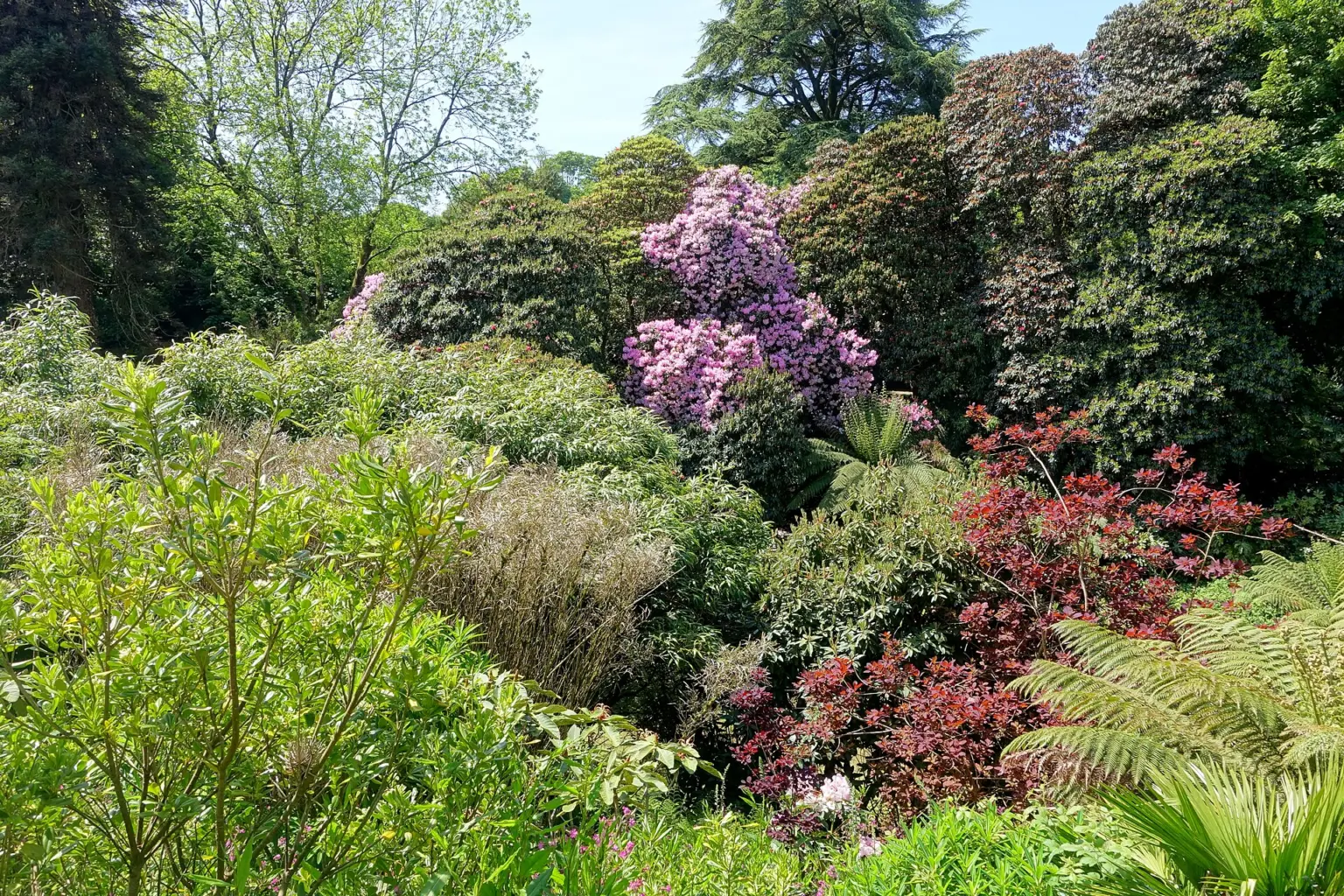
The Lost Gardens of Heligan were originally developed by the Reverend Henry Hawkins Tremayne. They include very large rhododendrons and camellias, a series of lakes fed by a ram pump, and Europe's only remaining pineapple pit. Two large sculptures, the Mud Maid and the Giant's Head, stand in the gardens. They are now open to the public. Check the gardens' own website for opening times and prices before you go.
Planning questions
Heligan is an estate near Mevagissey on the south coast of Cornwall. The house sits at the top of a hill overlooking the village.
They are the gardens of the Heligan estate, originally developed by the Reverend Henry Hawkins Tremayne. They fell into neglect and were rediscovered and rescued in a televised project in 1996.
The Cornish name is Helygen, which means willow tree.
The gardens have very large rhododendrons and camellias, a series of lakes fed by a ram pump, Europe's only remaining pineapple pit, and two large sculptures, the Mud Maid and the Giant's Head.
Must visit spots
Tourist places linked to Heligan, including stay, food, beaches and things to do. Local trade services are listed separately so this page stays visitor first.
A vital local hub for postal services and essential supplies in the Gorran parish, conveniently located for those…
A multi-award-winning farm shop offering exceptional fresh, local produce, including their own butchery, bakery, and deli.
Plan a visit to the Lost Gardens of Heligan with guidance on the restoration story, garden areas, access,…
Coast & countryside
Use the map and coast path links for walks, beaches and viewpoints near Heligan. Check tide, weather and cliff conditions before you go.
Local area
This page uses the same layout as our main destination guides. Listings and map pins show visitor places tagged to Heligan and the surrounding parish.
Walk from the harbour
Filter by eat, stay, fun and walks to plan a short visit.
One day itinerary
A simple plan you can shorten or swap for weather. Add local tips when you know the place.
Share a clear local view. Place the pin on the exact spot so the photo appears here, not on a nearby town.
Please log in to submit a Cornwall photo.
Discover & connect
Jump from Heligan to the parish, the mother town, nearby places, and stay or eat pages.
Popular nearby
A vital local hub for postal services and essential supplies in the Gorran parish, conveniently located for those…
A multi-award-winning farm shop offering exceptional fresh, local produce, including their own butchery, bakery, and deli.
Plan a visit to the Lost Gardens of Heligan with guidance on the restoration story, garden areas, access,…
There are no mapped places in this category yet.
Everything in one place
Every stay, place to eat, thing to do, beach and shop listed for Heligan.
No places in this category yet.
Looking for somewhere to stay in Heligan?
See the stays on the map, add your dates and guests, then check availability on Booking.com.
Plan your stay in Heligan on the map
Dydh da! What would you like to find in Cornwall?
Be one of the first cards people see in this list, with 12 photos and your own booking or website button. From £15 a month, first come, first served.
Be one of the first cards people see in this list, with 12 photos and your own booking or website button. From £15 a month, first come, first served.