Surf with lifeguards on duty
Powerful Atlantic waves, lessons and hire on the beach, and RNLI cover from spring to autumn. Stay between the flags.

Lat 50.4189° N, lon 5.0972° W●Surf beach in Newquay
Newquay's surf beach, a long run of sand between two headlands. Drag to look around and tap the surfers or the dog.

Arrow keys turn the view. Plus and minus zoom. Home goes back to the drone view.
Tide now:
Sea now:
Map data © OpenStreetMap contributors. Heights: Environment Agency LIDAR Composite DTM, © Environment Agency copyright and/or database right. Contains public sector information licensed under the Open Government Licence v3.0. Tide: this uses Environment Agency flood and river level data from the real-time data API (Beta). The seabed below the survey waterline is modelled. 3D drawn with three.js.
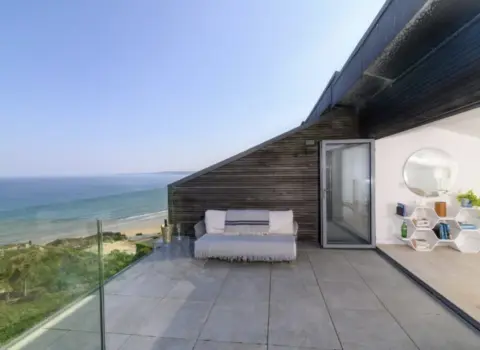
Newquay’s famous west facing surf beach, with golden sand, powerful Atlantic waves and RNLI lifeguards from spring to autumn.
The home of British surfing
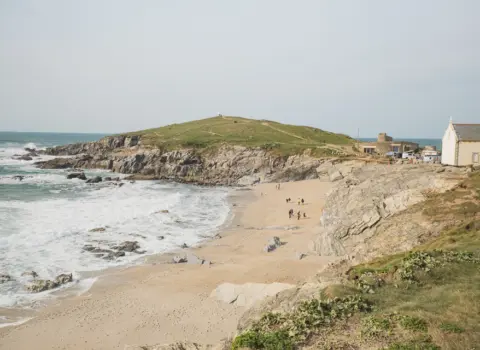
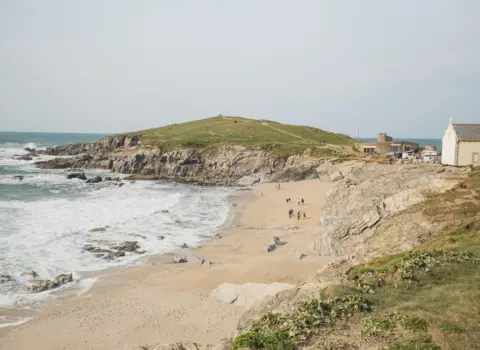
Fistral Beach is on the west side of Newquay, with a headland at each end: Towan Head and Pentire. It faces west into the Atlantic, with cliffs and dunes behind golden sand, so the sun sets over the sea. The town centre is about a 20 minute walk or a 5 minute drive away. It is one long beach with two different areas, North Fistral at the Headland end and South Fistral at the Pentire end, so pick the area that suits your day.
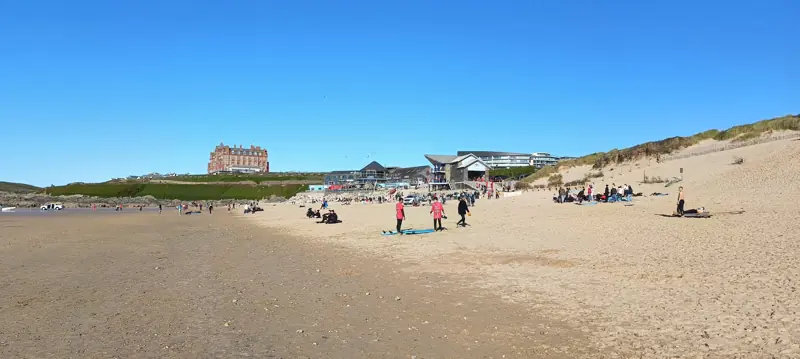
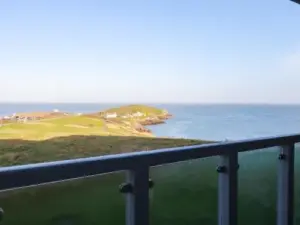
North Fistral is the busy end of the beach, off Headland Road (TR7 1HY). The car park runs along the back of the sand, and the Fistral Beach complex sits right beside it with the restaurants, cafes, surf hire and shops, such as Rick Stein's Fish and Chips, The Fish House and The Stable, with the lifeguarded main beach in front. Just north is the Headland Hotel, and beyond it Towan Headland, known locally as the Headland. Paths cross the grassy top to a small white lookout shelter with benches, with views back over the whole bay and out to sea. Little Fistral, a small separate cove, sits below it. It is the easy place to start for a first visit, a surf lesson or a family day.
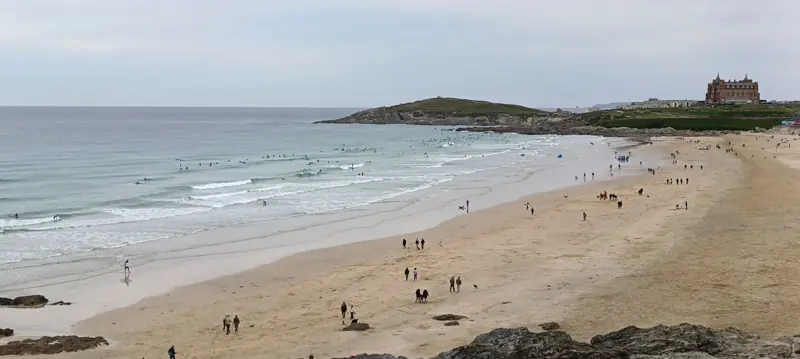
South Fistral is the quieter end of the beach, on the Pentire side. Esplanade Road runs along the clifftop above it, lined with hotels and cafes such as Fistral Beach Hotel and Spa and The Esplanade Hotel, and paths lead down from the road to the sand. It is a short walk on to Pentire, with the Pentire Hotel and its restaurant, and out to Lewinnick Lodge on the headland. The beach complex with the surf hire, toilets and showers is at the North end.
Surfers know it as the home of British surfing. Powerful, hollow Atlantic waves often reach 6 to 8 feet, and the beach hosts major contests, including the Boardmasters Surf Championships and the junior Groms events. Lessons and board and wetsuit hire are at the North end, so a first timer can be in the water the same morning. The waves are not for everyone, so beginners should take a lesson and stay in the lifeguarded area.
RNLI lifeguards patrol the main beach daily from spring to autumn, usually from around Easter to the end of October. Rip currents are the main danger, and the lifeguards here pull people out of them every summer. Swim or bodyboard between the red and yellow flags, keep to the black and white flagged area if you are surfing, and treat no flags as no lifeguards.
Planning questions
Yes, with care. Surf lessons and board and wetsuit hire are at the North end, and the lifeguarded area is the place to start. The waves are powerful and often reach 6 to 8 feet, so book a lesson, stay between the flags, choose a smaller day and ask the lifeguards where is best on the day.
Yes. At North Fistral there is a paid car park on Headland Road (TR7 1HY) with about 200 spaces. Charges and times are on the signs. At South Fistral, the Pentire end, parking is along the road and there is no big car park. Arrive early in summer and on surf contest days, when the beach is busiest.
Yes. Fistral is not on Cornwall Council’s list of beaches with seasonal dog restrictions, and Visit Cornwall lists it among beaches where dogs are welcome all year. Keep your dog under control, pick up after it and check the signs on the day, as rules can change.
RNLI lifeguards patrol Fistral daily from spring to autumn, usually from around Easter to the end of October, from 10am to 6pm. Dates and hours can change at short notice, so check before you travel. If there are no flags, there are no lifeguards.
Fistral is on the west side of Newquay, about a 20 minute walk or a 5 minute drive from the town centre. Parking at North Fistral is paid and South Fistral has roadside parking only, so walking is a good option if you are staying in town.
Yes, when the lifeguards are on duty. Swim or bodyboard between the red and yellow flags, and keep clear of the black and white flagged area, which is for surfboards. Rip currents are the main danger here, and the lifeguards rescue people from them every summer. If there are no flags, there are no lifeguards, so stay out of deep water.
Make the visit your own
Use these starting points to choose a route that fits the day, the conditions and the people you are with.
Powerful Atlantic waves, lessons and hire on the beach, and RNLI cover from spring to autumn. Stay between the flags.
A long west facing beach with Towan Head and the Headland end to the north and Pentire to the south. The facilities and the main lifeguarded beach are at the North end. The South West Coast Path runs past it.
Follow the coast path to Towan Headland from North Fistral, up to the white lookout shelter on the top, or to Pentire from South Fistral, for views back over the beach. Wear shoes with grip and keep back from the edge.
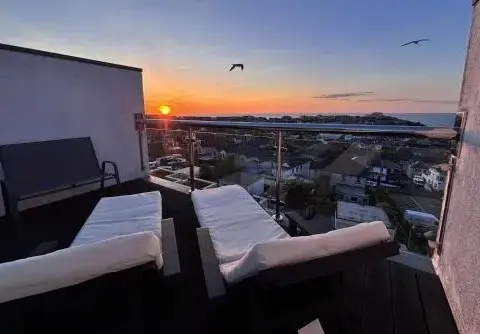
The beach faces west, so on a clear evening the sun goes down over the sea. Bring a layer, as it cools quickly.
A unique collection of independent stalls within a former bakery.
Harbour Rest Cafe in Newquay sits on South Quay Hill by the harbour. It is a straightforward spot…

The Great Western Surf Cafe is the cafe on the slope down to Great Western Beach, off Cliff…
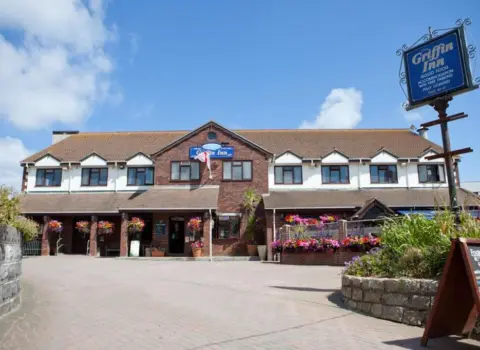
Griffin Inn is a hotel in Newquay, Cornwall, bookable on Booking.com.

Perched majestically overlooking Newquay Harbour and town, The Fort Inn offers classic pub fare, hearty meals, and a…
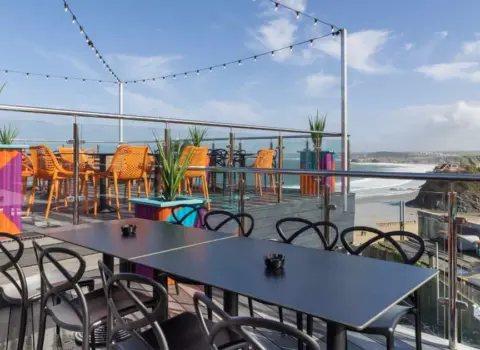
A traditional pub with rooms offering a cosy and authentic Cornish experience.
The Maharajah is an Indian restaurant on Cliff Road in Newquay, close to the town centre and the…
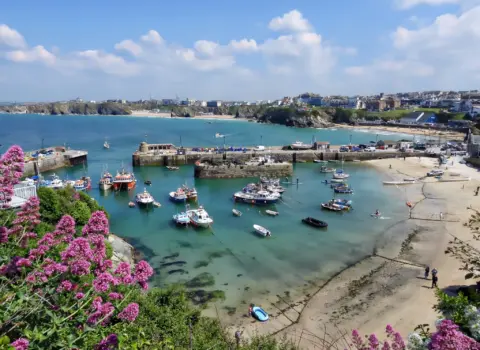
A street food venue on the sand at Newquay Harbour, with rustic decking, a full bar and cocktails.…
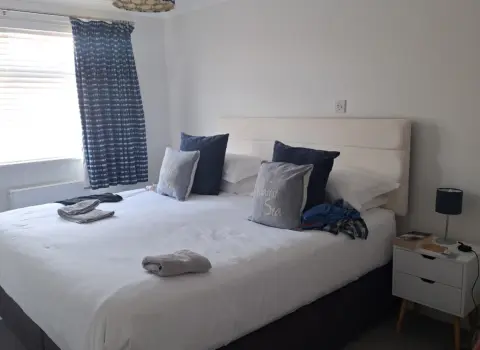
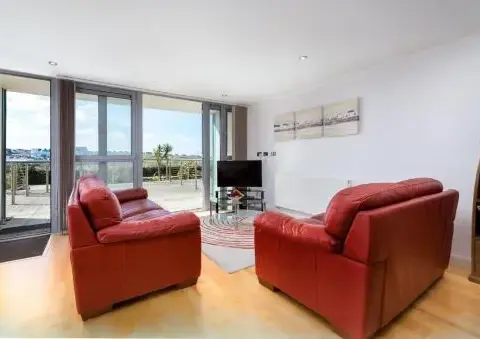
1 Chatsworth Riverscape Apartments is a place to stay in Newquay, Cornwall, bookable on Booking.com.
Walk from the harbour
A practical starting plan
This is a flexible outline. Check current opening, access, weather and travel information before setting out.
Powerful Atlantic waves, lessons and hire on the beach, and RNLI cover from spring to autumn. Stay between the flags.
A long west facing beach with Towan Head and the Headland end to the north and Pentire to the south. The facilities and the main lifeguarded beach are at the North end. The South West Coast Path runs past it.
Follow the coast path to Towan Headland from North Fistral, up to the white lookout shelter on the top, or to Pentire from South Fistral, for views back over the beach. Wear shoes with grip and keep back from the edge.
Arrive early and use the paid car park on Headland Road at the North end. Check the flags, then book a lesson or hire a board and wetsuit on the beach. If the sea is too big, walk the length of the sand instead.
Beginners stay in the lifeguarded area, between the red and yellow flags.
Cafes, takeaways and restaurants sit next to the sand at the North end. Use the showers and toilets there before you sit down.
Surf contest days and school holidays are busiest.
Follow the South West Coast Path to Towan Head at the North end or to Pentire at the South end and look back over the whole beach. Leave time for the walk back.
Paths are uneven and the edges are unfenced in places.
The beach faces west, so the sun sets over the sea. Lifeguard cover ends at the end of the afternoon, so stay out of the water once the flags come down.
No flags means no lifeguards.
Photos of Fistral Beach by Cornish.co.uk.
Please log in to submit a Cornwall photo.
Discover & connect
Jump from Fistral Beach to the parish, the mother town, nearby places, and stay or eat pages.
Popular nearby
There are no mapped places in this category yet.
Everything in one place
A selection of stays, places to eat, things to do, beaches and shops in Newquay.
No places in this category yet.

Dydh da! What would you like to find in Cornwall?

Be one of the first cards people see in this list, with 12 photos and your own booking or website button. From £15 a month, first come, first served.
Be one of the first cards people see in this list, with 12 photos and your own booking or website button. From £15 a month, first come, first served.